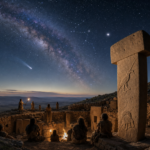


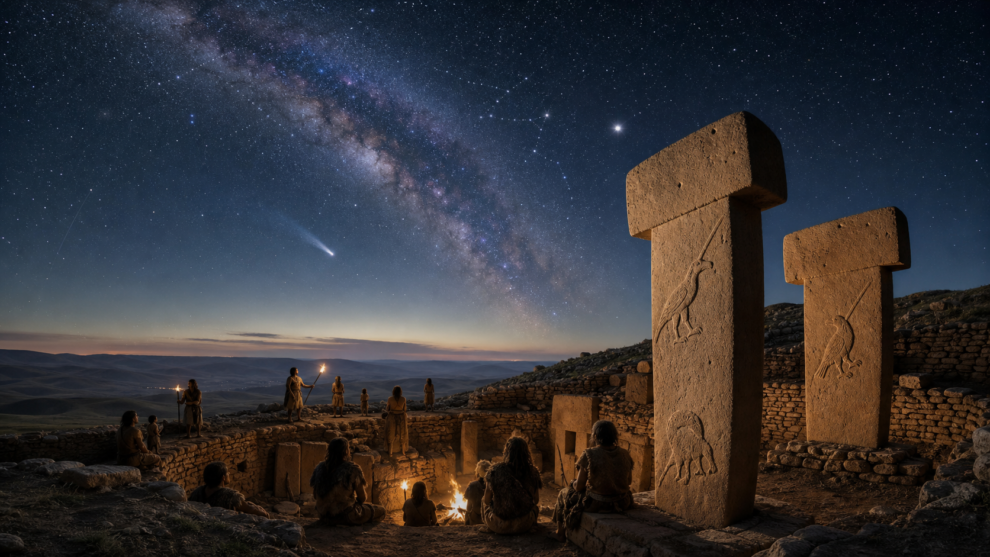

Göbeklitepe, the site of the first temple, is shown as one of the first starting points of human history. In a sense, Göbeklitepe illuminates us as the beginning of humanity's journey to establish civilization. Therefore, if we want to understand humanity's journey, the first place we should look is Göbeklitepe, which has been waiting silently under the ground for thousands of years near Şanlıurfa.
The Secret of Göbeklitepe
People living approximately 12,000 years ago had neither modern tools, nor writing, nor engineering knowledge in today's sense. Yet they processed and moved massive stones, erecting them in a specific order. More importantly, they united around a common purpose to build these structures. What Göbeklitepe tells us is this concept: Civilization was not solely born out of necessity. It was born out of faith, curiosity, imagination, and the desire to act together inherent in humans. Perhaps people did not first farm and then build temples; perhaps they developed agriculture, division of labor, and settled life in order to gather around a common dream. Meanwhile, they wondered about the universe by looking at the Milky Way Galaxy.
Inventions of Sumerian Civilization: Science and Writing
This quest, which began on the stones of Göbeklitepe, took on a new form in the Sumerian civilization thousands of years later. For the first time in history, humans transferred their thoughts not to stone, but to clay tablets. We can still read history on these tablets today. The emergence of writing was not just the recording of words. For the first time, humanity had created a memory that worked outside its own brain. It can be said that a Sumerian scribe was the first time traveler, able to send messages thousands of years after his time. Thanks to the Sumerians' invention of writing, we began to transmit the knowledge of history to the present and the future.
Thanks to writing, knowledge was freed from the lifespan of the person who produced it. Mathematics, astronomy, law, trade, and administration could be passed down from generation to generation. The wheel reduced distance; the calendar made time measurable. Additionally, irrigation systems partially linked the uncertainty of nature to human will. Thus, humans transformed from beings who merely adapted to their environment into beings who reshaped their environment. It would not be wrong to say that the first significant traces of civilization emerged with the Sumerians.
However, this great leap between Göbeklitepe and the Sumerians may seem small compared to the transformation we are experiencing today.
Man Commanding Matter and the New Civilization
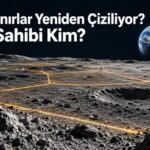
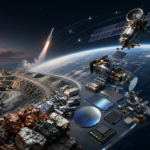
In Göbeklitepe, humans created temples by carving stone; in Sumer, they enabled the transfer of knowledge through writing on clay. Today, humanity commands silicon; tomorrow, it will be able to tell matter what it wants to be. When artificial intelligence-supported machines that can arrange atoms one by one emerge, the concepts of factory, field, pharmacy, and even objects will change: The same handful of matter could be transformed into a heart medication in the morning, a solar panel in the afternoon, and a part of a living unit on Mars at night. We can already do this partially with 3D Printers today, and these printers have even taken the first steps toward printing organs for humans on the International Space Station. In the near future, humanity will cease to be a civilization searching for raw materials to produce something and will become a civilization that transforms the matter it has into whatever it desires. From that point on, making technology will not mean adding new tools to nature, but intervening in nature's software. Civilization began when the people of Göbeklitepe shaped stone; when the people of the future assign tasks to atoms, humanity will transform into a species that not only uses but also writes the destiny of matter.
In such an age, the richest country in the world will not necessarily be the one with the most oil or minerals under its soil; it will be the one that can give the most accurate command to matter. Because a kilogram of ordinary rock, when broken down into its atoms and reassembled, can be transformed into food, medicine, fuel, or a spacecraft part. Scarcity will be seen not as a lack of matter, but as a lack of the knowledge and energy to transform it. On that day, gold will become just an ordinary element with atomic number 79, and trash will become valuable atoms in the wrong place. Humanity will perhaps understand for the first time that there is no such thing as waste. All the garbage of a city could be disassembled and turned into new homes, vehicles, and food; deserts could be transformed into giant energy-producing structures, ocean water into drinking water, and the soil of Mars into breathable living spaces. Thus, the economy will become an economy of forms that can be imposed on matter, not of possessed objects.
The Human Body and Infinity
However, a greater consequence will emerge: If matter can be programmed, so can the human body. Diseases will not be read as external fates, but as faulty instructions operating within cells. A cancerous cell could be retrained before being destroyed, a damaged organ could be repaired within the body, and aged tissues could be rejuvenated by reversing their biological clocks. Hospitals will cease to be mere places where diseases are treated and will transform into centers where the human body is periodically renewed. Thus, even aging, accepted for thousands of years as humanity's most immutable truth, could become a technical problem.
This is where the real breakthrough will occur. Because when human lifespan extends to one hundred and fifty or two hundred years, we will not just live longer. In a way, the entire order of civilization will change. We will see people starting university at seventy, acquiring a new profession at one hundred, and migrating to another planet at one hundred and fifty. Projects we once deemed impossible within a single lifetime will become tasks that a single individual can complete. A scientist will be able to witness the arrival of an interstellar vehicle they launched in another system; an architect will be able to see a small base they established on Mars grow into a large city. For the first time, humans will be beings who not only inherit from the past but also personally witness the outcome of a step they took in the distant future.

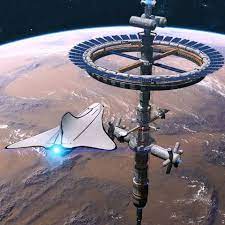
But humanity's greatest technological achievement will not be programmable matter, life extension, or establishing cities on other planets. The greatest achievement will emerge from the combination of all these. Humans who can redesign themselves according to the planet they inhabit. Biological bodies can be developed that can withstand the low gravity on Mars, the freezing cold on Saturn's moons, and different atmospheres in distant star systems. Thus, humans will adapt themselves to the universe instead of trying to make the universe resemble Earth. Thousands of years later, our descendants living on different planets may become so different from each other that they may have difficulty believing they come from the same ancestor. Some may live underground, some within oceans, some in artificial bodies, and some in digital environments without needing a biological body.
The Path from Göbeklitepe to Space
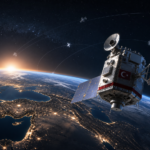
Perhaps this was the true direction of the story that began with Göbeklitepe from the very beginning. Humans first shaped stone, then soil, metal, energy, and information. Now it's time for their own bodies, lifespan, and the worlds they can live in. And perhaps one day, our descendants living thousands of light-years away from Earth will remember Göbeklitepe while erecting the first stone on the soil of another planet. Because they will understand that humanity's first monument was not erected to the past; it was an unintentional marker stone left for the future, among the stars. “Göbeklitepe was a Beginning, but it Will Never be an End.”



Add Comment